

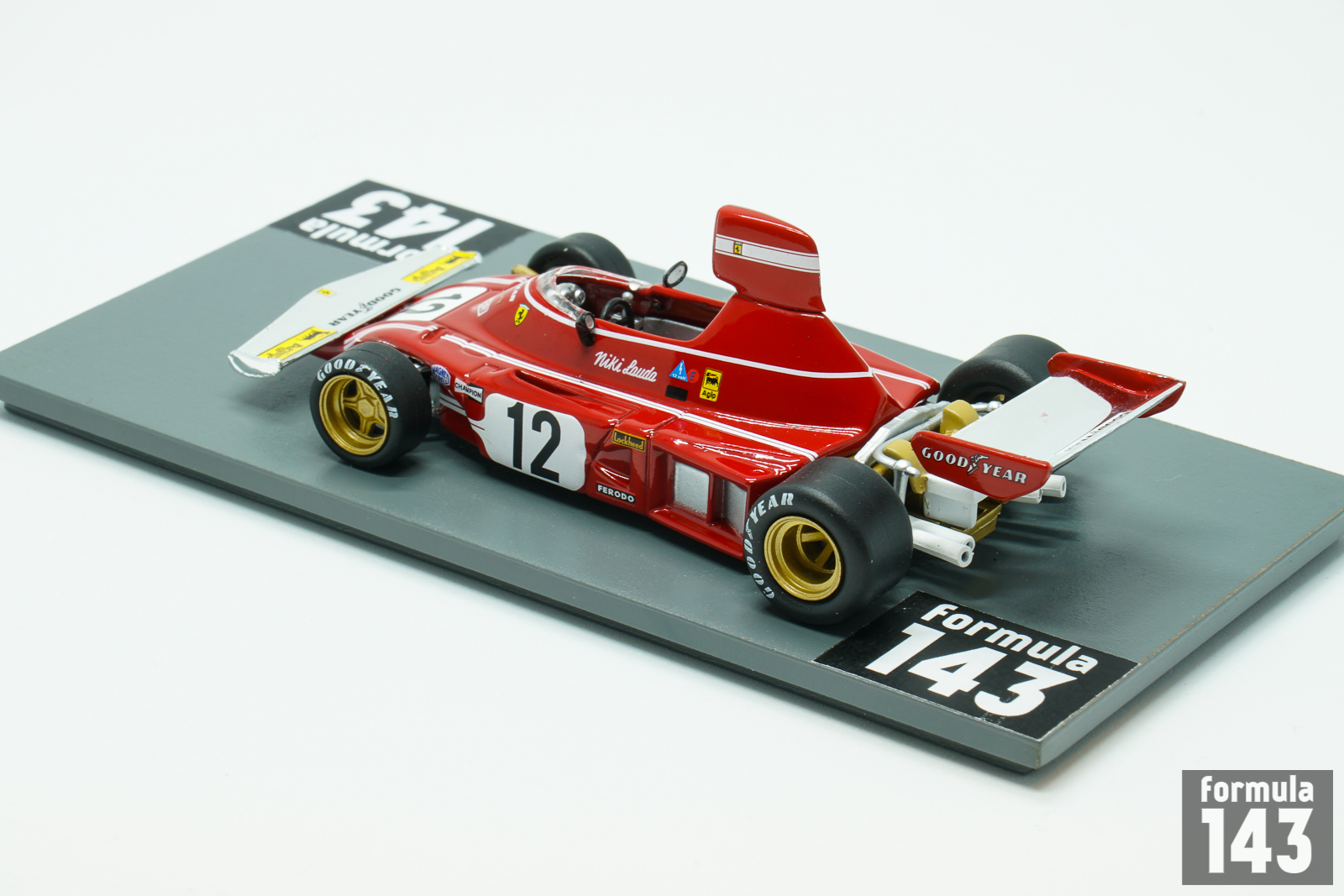
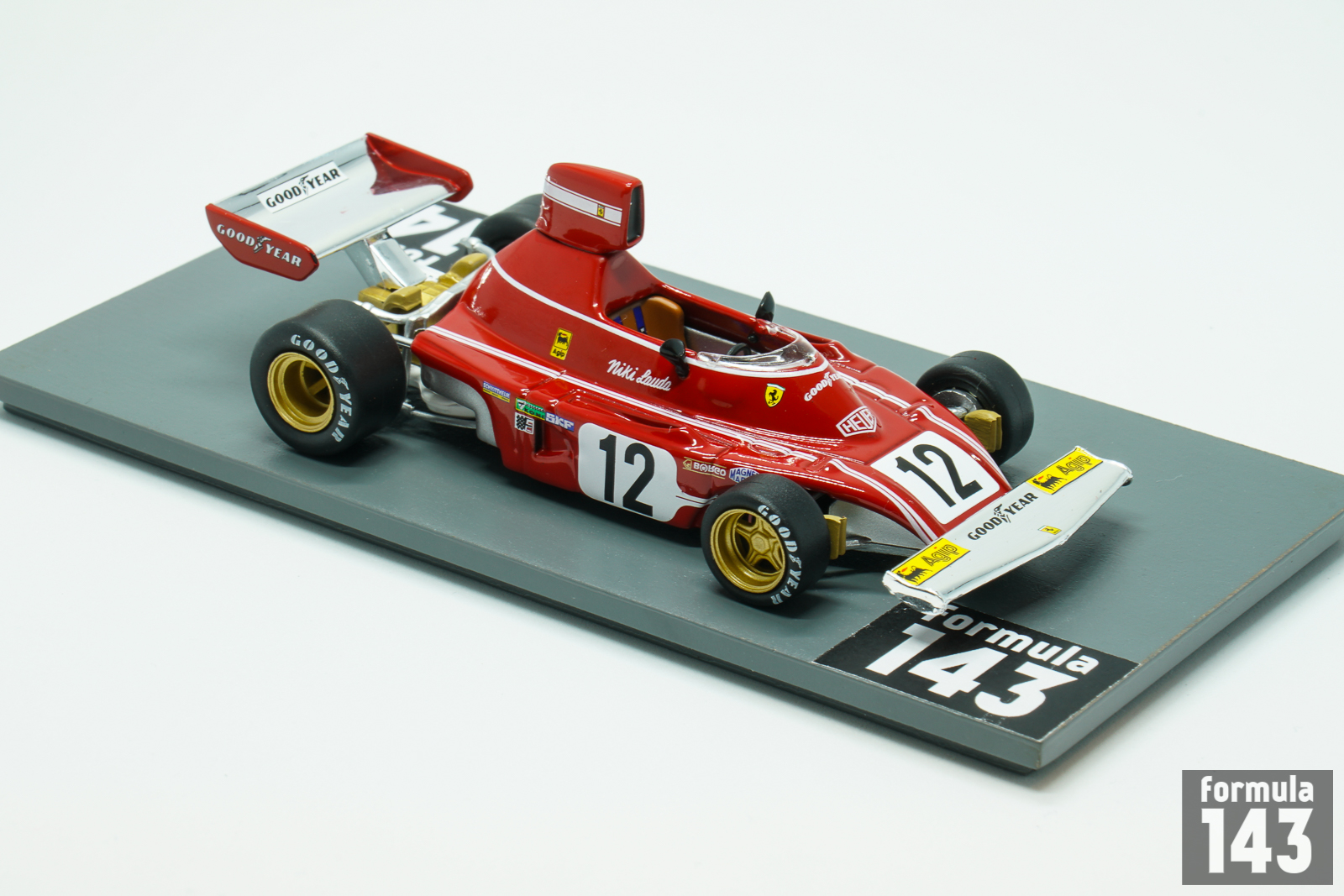


The 312B3-74 was the last version of the long-lived 312B model, launched in 1970. For 312B3 of 1973 a new full monocoque chassis was built by English company TC Prototypes, under John Thompson’s guidance, and the engine became a fully stressed member. After an unsuccessful start to the 1970s culminating in a disastrous start to the 1973 season, Ferrari regrouped completely under Luca di Montezemolo. For 1974 Ferrari heavily revised the car, named 312 B3-74. The major improvements were the shorter wheel base and different weight distribution, the radiators were in the flanks, and the periscope-style air intake remained. The car proved to be very competitive but it wasn’t nearly as reliable. It scored three wins (Lauda in Spain and Holland, Regazzoni in Germany) and 6 pole positions. Lauda, signed by Ferrari from BRM, quickly proved his abilities by a second-place finish in his debut race for the team, the season-opening Argentine Grand Prix. His first Grand Prix victory – and the first for Ferrari since 1972 – followed only three races later in the Spanish Grand Prix.
| Season | Series | Event |
| 1974 | F1WC | |
| Driver | No. | Entrant |
| Niki Lauda | 12 | Scuderia Ferrari SpA SEFAC |
| Scale | Manufacturer | Collection |
| 1:43 | IXO | Fabbri Ferrari F1 Collection |
| Cat. No. | Quality | Rarity |
| No. 60 | 
| 
|
 formula143